
Quick answer: To list a token on CoinGecko, it needs an active market on a tracked exchange or DEX, liquidity that holds up under inspection (roughly $50,000 daily volume, spread under 1%, and a genuinely populated order book), a token page on GeckoTerminal if it trades on a DEX, a public verification post from an official social account, and a complete submission through CoinGecko’s request form. Regular review typically takes a few days to a few weeks; a paid Fast Pass buys priority, not approval. After a rejection, wait two weeks before resubmitting — repeat requests get flagged as spam.
CoinGecko sits alongside CoinMarketCap as one of the two aggregators most crypto investors actually open, and the two are frequently treated as a single task: submit the same package twice, collect two listings. That assumption is where a lot of applications fail. CoinGecko runs its own review process, weighs different signals, and has added verification steps that don’t exist on the other side.
This guide covers what CoinGecko specifically requires, how its process differs from CoinMarketCap’s, and the rejection reasons that catch most projects. If you’re working through both, our companion guide on how to list a token on CoinMarketCap covers that side.
How CoinGecko’s Process Differs from CoinMarketCap’s
Four differences matter in practice:
- GeckoTerminal is part of the pipeline. CoinGecko operates its own DEX data terminal, and for tokens trading on decentralized exchanges, the CoinGecko review draws on that data. There’s no CoinMarketCap equivalent.
- Public ownership verification. CoinGecko asks projects to publish a verification post from an official social account and then reply to it with the Request ID after submitting. This ties the form, the social account, and the project together.
- Community signals carry real weight. A specific rejection reason exists for projects CoinGecko can’t detect organic attention around. Thin or inactive social channels are a listing problem here in a way they aren’t elsewhere.
- There’s a formal cooldown. Resubmitting too soon after a rejection gets an application treated as spam, which makes things slower rather than faster.
CoinGecko Listing Requirements
CoinGecko reviews manually, and the review is a verification exercise: is this token real, does it trade for real, and does everything the team submitted check out against public sources. The concrete bar:
| Requirement | What it means in practice |
|---|---|
| Live on a supported exchange | At least one market on an exchange CoinGecko tracks. Two or three tracked markets improve review priority — CoinGecko weighs the number of markets. |
| Trading volume | Around $50,000 in genuine daily volume is the commonly cited working floor. |
| Spread | The gap between best bid and best ask should stay under 1%. A wide spread reads as an inactive market regardless of headline volume. |
| Liquidity depth | Meaningful value on both the bid and ask side within a 2% spread — on the order of $500–$1,500 each is the figure most commonly referenced. |
| Order book population | Roughly 25 bids and 25 asks, not a handful of large orders standing in for a real book. |
| Verified contract | Source code verified on the block explorer. Unverified or proxy contracts are an explicit rejection category. |
| Active community | Real followers and engagement on channels linked from the official website. Dead channels hurt more than missing ones. |
| Original project | No cloned websites, copied whitepapers, or trademark conflicts with existing projects. |
For DEX-only tokens, the equivalent of order book depth is pool size — a shallow pool produces the same failure and is just as visible to a reviewer.
How to List a Token on CoinGecko: Step by Step
Step 1 — Get a market on a tracked exchange
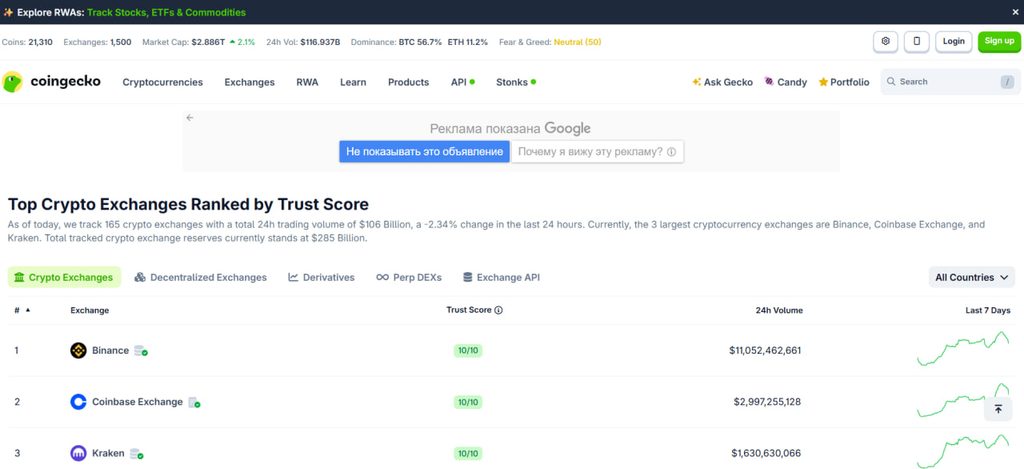
Nothing proceeds until the token trades somewhere CoinGecko pulls data from. Check the venue against CoinGecko’s supported exchange list before paying any listing fee — a market on an untracked exchange contributes nothing to the application. Where possible, choose venues tracked by both CoinGecko and CoinMarketCap so a single exchange listing serves both submissions.
Step 2 — Build liquidity that survives inspection
The numbers in the table above are floors, not targets, and reviewers look at them together rather than individually. Volume with a 5% spread and four orders in the book tells a reviewer the activity isn’t organic. Sustained volume across consecutive days, a tight spread, and a genuinely populated order book on both sides is what a real market looks like — and that’s the pattern the review is checking for.
Step 3 — Set up the token on GeckoTerminal
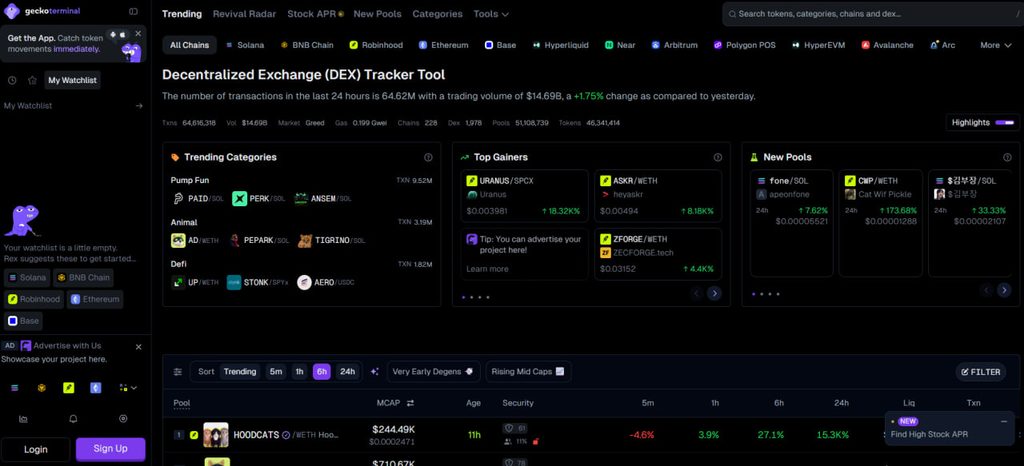
This step is specific to CoinGecko and gets skipped constantly. GeckoTerminal is CoinGecko’s own DEX data platform, and it only tracks decentralized exchanges — not centralized ones. For a token with a DEX market, the sequence is: create a pool on an established DEX, let the GeckoTerminal page populate automatically, then submit the update request form there to fill in the token’s details.
Doing this before the main application matters because CoinGecko’s team draws on GeckoTerminal data during review. A token with a complete GeckoTerminal presence gives reviewers something to verify against; a token without one gives them a gap.
Step 4 — Publish the public verification post
Before filling out the form, publish a post from an official social account that is linked directly from the project website — stating that the project is preparing a CoinGecko submission, including the GeckoTerminal URL if one exists. After submitting the form, reply to that same post with the exact Request ID.
This is the step most teams either miss or do in the wrong order. Publishing the verification post after submission, or forgetting the Request ID reply, breaks the chain CoinGecko uses to confirm the request came from the actual project team.
Step 5 — Complete and submit the form
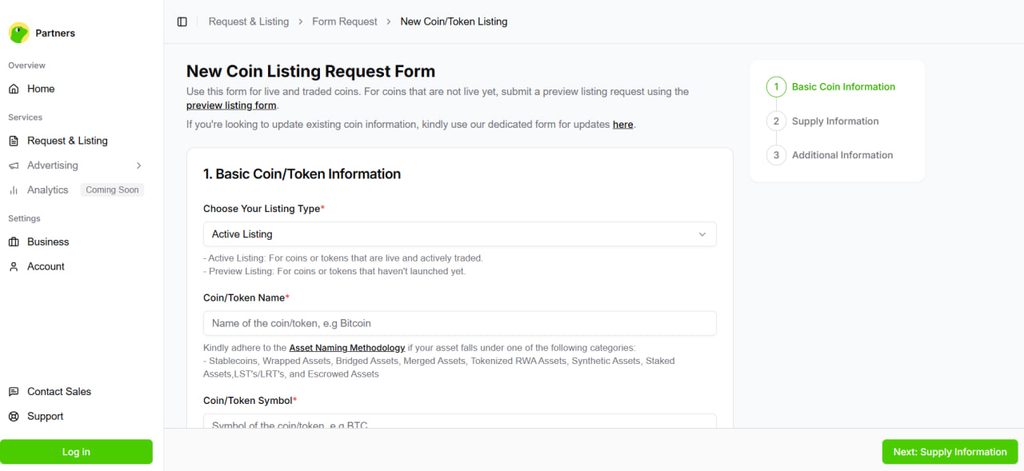
Applications go through CoinGecko‘s request form, under the token listing section. The form is long and asks for genuinely detailed information. What matters most:
- Pick the right listing type. Active Listing is for tokens already launched and trading. Preview Listing, where offered, is for tokens that haven’t launched yet. Choosing wrong creates an immediate mismatch with the evidence.
- Use a project-domain email and describe the submitter’s role accurately. If an agency is submitting, say so in the remarks rather than obscuring it.
- Write the description in factual, third-person language. Avoid “revolutionary,” “best,” “guaranteed,” and anything price-focused. Label planned features as planned — a roadmap item presented as a live product is a credibility problem when a reviewer checks.
- Give direct market URLs — the exact trading pair page or DEX pool, not the exchange homepage.
- Get the contract details exactly right. Chain, contract address, and decimals copied from the explorer, not from memory or internal docs.
- Explain supply honestly. Max, total, and circulating supply, plus burned, locked, vested, treasury, and team wallets. If a lock proof doesn’t exist, say so rather than implying one does. Use the additional-information field for assumptions and caveats — that’s what it’s for.
- Only claim categories you can evidence. Since 2024 CoinGecko has tightened category approvals; a landing page and a plan aren’t enough where a working product is expected.
- Prepare a clean logo — square, around 200×200, transparent background.
Regular Pass vs. Fast Pass
| Regular Pass | Fast Pass | |
|---|---|---|
| Cost | Free | Paid — confirm the current price at checkout, as it changes |
| Review window | Typically a few days, longer when the queue is busy | Priority review, commonly cited as within 24 hours |
| Affects approval odds? | No | No — same criteria, faster answer |
| When it makes sense | Most projects, when timing isn’t critical | A launch or campaign with a hard date, and a submission that’s already complete |
The distinction worth internalizing: Fast Pass is priority review, not a paid listing. A thin, inconsistent application bought through Fast Pass gets rejected sooner, not approved. It can be purchased before submission or added afterward from the dashboard where the option is available.
Why CoinGecko Applications Get Rejected
| Rejection reason | What to do about it |
|---|---|
| Suspected smart contract security risk | Check the token across several public scanners and note every warning. Fix what’s real — verify source code, renounce ownership, lock liquidity, remove or disable risky admin functions, publish an audit. If a warning is a false positive, ask that platform for a manual rescan with evidence, since CoinGecko relies on those public indicators. |
| Volume too low | Build genuine trading activity, potentially across additional markets. Resubmitting the same numbers produces the same answer. |
| Liquidity too low | Deepen the DEX pool or increase bid/ask size within the 2% spread on a centralized market. |
| Insufficient organic attention | Build real community engagement rather than follower counts. Remove near-empty channels from the website — a linked channel with 30 followers is worse than no link. |
| Not an original project | Copied site copy, a derivative whitepaper, or trademark conflict. This one requires fixing the project’s positioning, not the application. |
| Unverified or proxy contract | Verify the source on the explorer. If a proxy pattern is unavoidable, document why and what the upgrade controls are. |
| Categories and tags declined | Category claims now expect demonstrable product, not roadmap intent. Reapply once something is live. |
The two-week rule
After a rejection, wait roughly two weeks before submitting again. Reapplying immediately gets an application flagged as spam, which slows everything down — and reapplying without fixing the underlying issue produces the same rejection regardless of timing. Use the gap to gather updated evidence, then explain in the remarks what changed and link the proof.
After the Listing
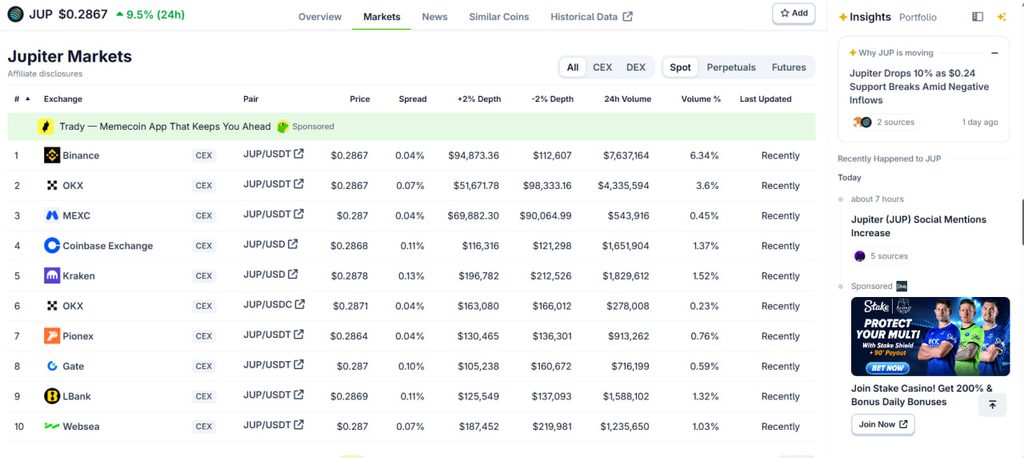
The page going live is the start of the maintenance, not the end of the work:
- Add new markets as they appear. New exchanges and pairs are submitted through a separate update request with the exact public market URL. These typically process within a few days.
- Enable circulating supply. Once several markets are live, submitting circulating supply gives the token a dynamic market cap and a ranking — without it the page stays incomplete in the exact way investors notice.
- Keep the price consistent across markets. Significant divergence between venues is itself grounds for rejection on update requests.
- Keep the profile current. Links, descriptions, categories, and socials drift. A stale page undercuts the credibility the listing was meant to build.
CoinGecko Is One Platform in a Wider Picture
CoinGecko and CoinMarketCap between them reach the trading audience, but investors evaluating a raise look at fundraising platforms, and on-chain users look at activity-based rankings. Our Crypto Trackers & Listings service prepares one verified data package and submits it correctly across the platforms that fit a project’s stage — then keeps the profiles current afterward. For the broader map of which platforms are worth the effort, see Top 5 Crypto Trackers, Listings & Rating Platforms.
FAQ: Listing a Token on CoinGecko
What are the requirements to list a token on CoinGecko?
An active market on a CoinGecko-tracked exchange or DEX, genuine trading volume (roughly $50,000 daily as a working floor), a spread under 1%, real liquidity within the 2% spread, a properly populated order book, a verified contract on the block explorer, active community channels linked from the official website, and a complete submission through CoinGecko’s request form backed by a public verification post.
How long does a CoinGecko listing take?
Regular review commonly runs from a few days up to a few weeks, depending on queue volume and how complete the submission is. Fast Pass buys a priority review window, commonly cited as within 24 hours. Every follow-up question from a reviewer adds a cycle, which is why a complete first submission matters more than the pass type.
Do I need GeckoTerminal to list on CoinGecko?
For a token trading on a decentralized exchange, yes in practice. GeckoTerminal is CoinGecko’s own DEX data platform, and the review team draws on its data. Create the pool, let the GeckoTerminal page populate, submit the update form there, and include the URL in the CoinGecko application. Tokens trading only on centralized exchanges aren’t covered by GeckoTerminal.
Is CoinGecko Fast Pass worth paying for?
Only when timing genuinely matters and the submission is already complete. Fast Pass prioritizes review speed and nothing else — the same criteria apply, and an incomplete or thin application gets rejected either way. It’s a scheduling tool, not an approval mechanism.
Why was my CoinGecko application rejected?
The most common causes are insufficient volume or liquidity, a suspected smart contract security risk flagged by public scanners, an unverified or proxy contract, too little organic community attention, or a project judged not to be original. Each is fixable, but resubmitting without addressing the cause produces the same result.
How soon can I resubmit after a CoinGecko rejection?
Wait about two weeks. Submitting again immediately risks having the request treated as spam, which delays review further. Use the time to fix the underlying issue and gather evidence, then explain the changes in the remarks field of the new submission.
Should I apply to CoinGecko or CoinMarketCap first?
They’re independent platforms with separate processes, and neither is a prerequisite for the other. Most projects apply to both once a token is actively trading, since traders default to different aggregators. The practical sequencing point is choosing exchanges tracked by both, so one market serves both applications.
Conclusion
CoinGecko isn’t CoinMarketCap with a different logo. It runs its own verification chain — GeckoTerminal, the public ownership post, the Request ID reply — and it weighs community signals and contract security more explicitly than most teams expect. Projects that treat it as a copy-paste of their CMC submission tend to discover the difference through a rejection. Projects that prepare the evidence, publish the verification post in the right order, and submit a form where every field can be independently checked generally get through without incident.
 Best Crypto Marketing Agencies in 2026: Ranked & Compared
 How to List a Token on CoinMarketCap in 2026: Requirements, Timeline & Costs
 Top 5 Crypto Media Outlets Worth Your Project's Attention in 2026
 Top 5 Crypto Trackers, Listings & Rating Platforms Worth Your Project's Attention in 2026
 Crypto Trackers, Listings and Rankings: Why Every Web3 Project Needs to Be on CoinMarketCap, CoinGecko and More
 Email Marketing for Crypto and Web3 Projects: How to Attract Investors, Users, and Community Through Email
 How Much Does Crypto Marketing Cost in 2026? Full Budget Breakdown for Web3 Projects
 Meme Coin Growth Marketing Strategy in 2026: From a Viral Tweet to Billion-Dollar Market Cap
 GameFi Growth Marketing Strategy for 2026